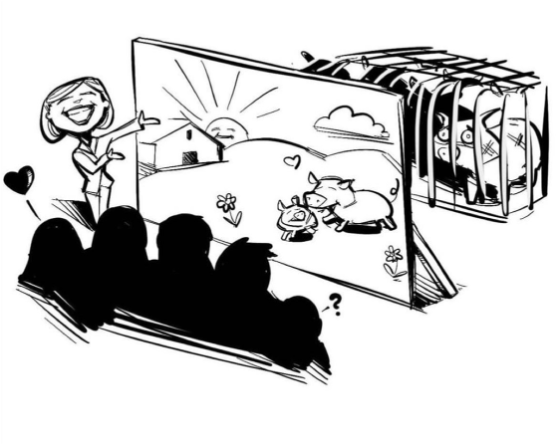
We then worked in groups to examine how industrial food production is constructed as a social problem by different actors and at different points in time. Students considered how these issues enter public consciousness and how they become embedded in social practices such as consumption.
My classes challenge students to think critically about prevailing social paradigms. I foreground power relations and their role in shaping how people understand environmental issues and spotlight how cultural norms privilege some ways of thinking about these issues over others. My classroom practice centers collaborative learning through small-group work, peer review, and student-led discussion.
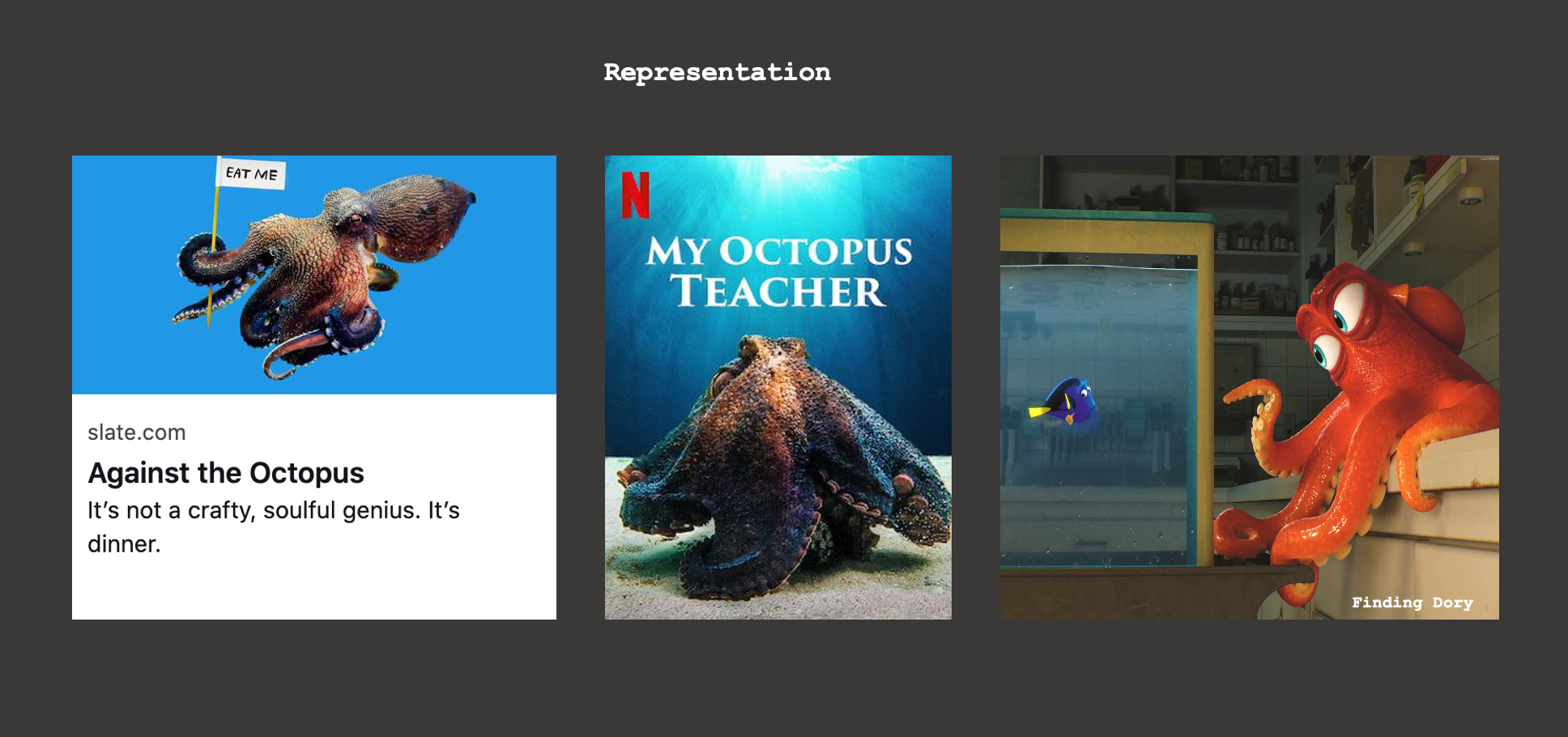
I often use popular culture examples to examine complex sociological concepts. As a guest instructor in the Department of Environmental Science and Policy at the University of Miami, the students and I contrasted the different representations of animals used in food production across various media landscapes.
The examples below prompted students to consider how these different representations construct animals as food, individuals, or cultural objects, and how these representations shape attitudes toward their protection or/and use.